COAT CLASS
Doodle ear care: safe cleaning, drying, and infection warning signs
Healthy ear care is not aggressive or automatic. Check first, clean only when your veterinarian recommends it, keep moisture under control, and stop when an ear is painful or inflamed.
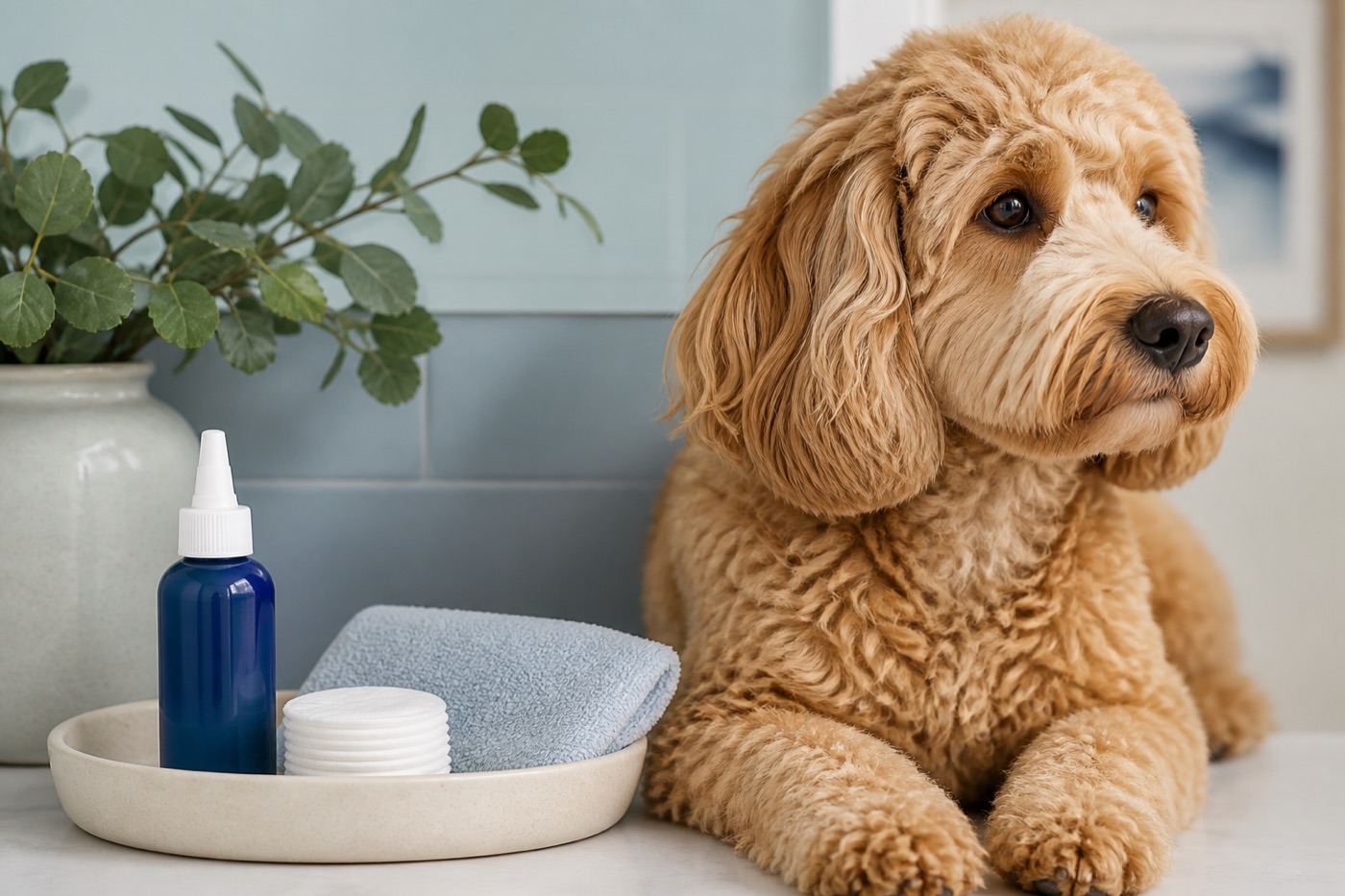
Know what normal looks like
Look at both ears when your dog is comfortable. A normal ear should not have a strong odor, marked redness, swelling, heavy discharge, or obvious pain. Learning your dog’s baseline makes small changes easier to identify.
Hairy ear openings and floppy pinnae can reduce ventilation, but appearance alone does not diagnose an infection. Merck explains that otitis externa can involve allergies, parasites, foreign material, bacteria, yeast, anatomy, or middle-ear disease. Recurrent trouble needs investigation, not simply stronger cleaner.
- Compare the color, odor, moisture, and debris in both ears
- Watch for new head shaking or scratching
- Notice reluctance to have the head or ear touched
- Photograph a change before cleaning if a veterinary visit is planned
Do not clean every ear on a fixed schedule
Some healthy dogs rarely need ear cleaning, while dogs with recurrent disease may need a veterinarian-designed maintenance schedule. VCA warns that over-cleaning can irritate the canal and contribute to problems.
Ask your veterinarian to examine the ears, confirm that cleaning is appropriate, recommend the exact product, and demonstrate the technique. A painful, swollen, bleeding, or heavily obstructed ear should be examined before home cleaning.
- Clean for an identified need—not simply because a week passed
- Never use leftover prescription drops for a new episode
- Do not share applicators between pets
- Stop if routine handling suddenly becomes painful
Use a gentle veterinarian-approved technique
Have gauze or cotton rounds, treats, and the veterinarian-approved cleaner ready. Lift the ear flap gently and keep the bottle tip outside the canal. Apply the amount you were shown, massage the base of the ear, allow the dog to shake, then wipe only the material that moves into view.
Do not insert cotton swabs, forceps, or fingers deep into the canal. They can push debris farther inward or injure inflamed tissue. Use fresh gauze for each ear and keep the cleaner bottle tip clean.
- Work in a calm, well-lit area
- Use only the cleaner and frequency recommended for this dog
- Wipe the visible pinna and canal entrance gently
- Reward cooperation and keep sessions short
Keep bath and swimming moisture controlled
Moisture can weaken the ear canal’s skin barrier and encourage overgrowth. During bathing, avoid directing water into the ear opening. Afterward, dry the outer ear and surrounding coat gently rather than inserting towels or cotton deeply.
For a dog that swims frequently or has repeated post-swim problems, ask the veterinarian whether a preventive drying product is appropriate. The answer depends on the health of the canal and eardrum; a home vinegar or alcohol mixture is not a safe substitute for examination and individualized advice.
- Dry the pinna and hair around the opening after water exposure
- Do not pack cotton into the canal during a bath
- Keep high-velocity dryer airflow out of the ear canal
- Report a pattern of symptoms after every swim or groom
Ear hair removal is not automatic
Routine plucking of healthy ear-canal hair is controversial. Merck notes that removing hair can trigger inflammation and should not be done when the hair is not causing a problem. Some dogs with obstructive hair and recurrent disease may benefit from carefully planned clipping or removal.
Ask the veterinarian and groomer to agree on a plan for your individual dog. Do not pull hair from a red or painful canal, apply powder into the ear, or assume a dramatic amount of plucking makes an ear cleaner.
- Trim only the surrounding coat needed for airflow and visibility
- Do not pluck simply because the dog is a Doodle
- Have problem ears medically assessed before grooming
- Tell the groomer about medications, infections, and recent symptoms
Recognize an infection early
Head shaking, scratching, odor, redness, warmth, swelling, discharge, scaly skin, or pain can indicate otitis externa. An ear infection cannot be diagnosed reliably by discharge color or smell alone; veterinary examination and microscopic evaluation help identify yeast, bacteria, parasites, and inflammation.
Arrange an appointment promptly when these signs appear. Seek urgent veterinary care for a sudden head tilt, loss of balance, circling, vomiting with dizziness, facial droop, inability to stand, severe pain, or rapid swelling of the ear flap.
- Do not clean aggressively before a painful ear is examined
- Keep the ear dry until your veterinary team advises otherwise
- Prevent self-trauma with veterinary guidance
- Complete prescribed treatment and attend the recommended recheck
Recurring infections need a cause-focused plan
When ear disease returns, allergies, anatomy, moisture, foreign material, treatment technique, and resistant organisms may all need consideration. Treating only the latest overgrowth without addressing the underlying condition can create a repeating cycle.
Keep a simple record of which ear is affected, swimming and grooming dates, skin or paw symptoms, diet changes, medications, and response to treatment. That history helps the veterinary team build a maintenance plan based on the dog rather than internet folklore.
Sources
The bottom line
Learn what normal looks like, keep bath and swimming moisture controlled, and clean only with a veterinarian-approved plan. Pain, odor, discharge, or recurring inflammation belongs at the veterinary clinic.