SENSITIVE CLASS
French Bulldog harness fit: breathing-safe walking and sizing
A harness cannot correct an obstructed airway, but a well-fitted design can avoid unnecessary neck pressure while you keep walks short, cool, controlled, and appropriate for the individual dog.
Start with breathing, not equipment
French Bulldogs are brachycephalic, meaning shortened skull anatomy can narrow the upper airway. The American College of Veterinary Surgeons lists noisy breathing, gagging, exercise intolerance, blue gums, and collapse among possible signs of brachycephalic obstructive airway syndrome.
A harness is a management tool, not a treatment for BOAS. Ask your veterinarian to assess loud breathing at rest or during light activity, repeated gagging, poor recovery, sleep disruption, or limited exercise tolerance before increasing walks or buying equipment to work around the problem.
- Treat awake snoring or raspy breathing at rest as a medical concern
- Record a short video of breathing during rest and recovery
- Keep the dog lean with veterinary guidance
- Seek emergency care for blue or gray gums, collapse, or severe breathing distress
Why a body harness is usually preferred
VCA recommends a harness that does not tug at the neck for dogs with BOAS because a regular collar can place pressure on the neck. Identification tags can remain on a comfortably fitted collar, while the walking leash attaches to the body harness.
Avoid choke, prong, slip, and tightening designs around the neck. No walking tool should depend on pain or airway pressure. If pulling is difficult to manage, work with a qualified reward-based trainer and your veterinarian rather than selecting increasingly restrictive equipment.
- Attach the walking leash to the harness—not the ID collar
- Choose secure hardware sized for the dog’s weight
- Check that straps lie flat without twisting
- Use a backup connection only if it does not create neck tension
Fit around the airway and shoulders
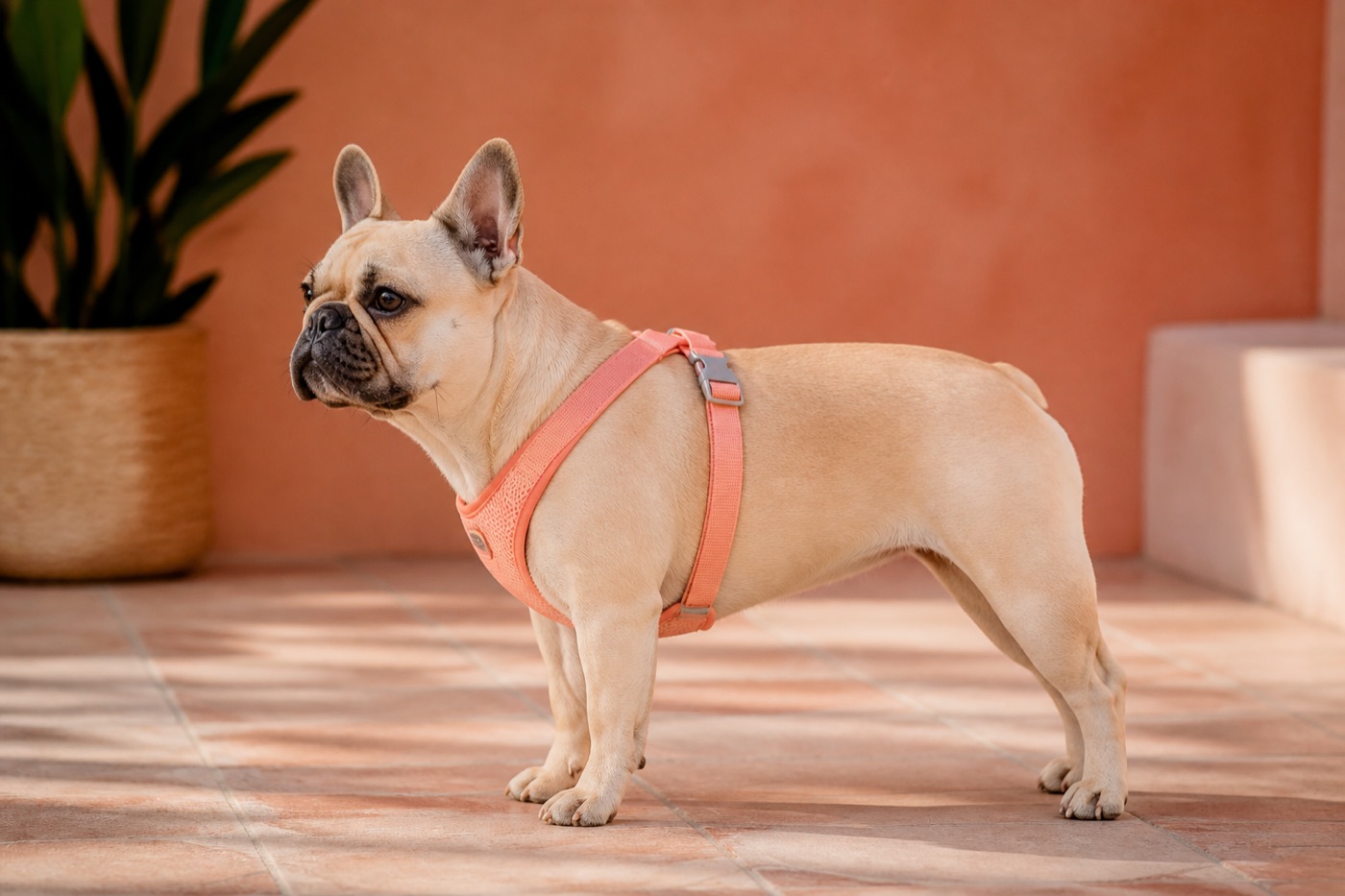
Measure the lower neck and the widest part of the rib cage while the dog is standing naturally, then follow the maker’s current size chart. A broad chest plate or Y-shaped front should sit on the breastbone rather than across the throat.
The front straps should allow the shoulder to move freely, and the girth strap should stay behind the front legs without rubbing the armpits. Fit should be snug enough to prevent backing out but not compress the chest. Recheck while sitting, walking, and turning—not only while standing.
- Confirm no strap crosses the soft throat
- Check for rubbing behind elbows and in skin folds
- Make sure breathing effort does not increase in the harness
- Re-measure puppies and dogs whose weight changes
Run a calm escape and comfort test
Indoors, clip the leash and apply gentle pressure in each direction while another person watches the straps. The harness should not rotate into the throat, slide over the head, or allow an elbow to pass through an opening.
Begin with several short reward-based sessions before walking outdoors. Check the skin after five minutes, then again after a normal walk. Hair loss, redness, pinching, altered gait, coughing, or reluctance to move means the fit or design needs reassessment.
- Practice putting it on without forcing the head or legs
- Reward standing calmly before clipping the leash
- Use an enclosed area for the first movement test
- Inspect buckles and stitching before every walk
Make the walk airway-safe
The Royal Veterinary College reports that exercise is a common trigger for heat-related illness and that brachycephalic dogs face increased risk. Walk during the coolest safe conditions, choose shade and easy terrain, carry water, and turn back before the dog becomes distressed.
Let the dog set a conservative pace. Panting that becomes louder, harsher, or less effective; repeated stopping; a wide tongue; excessive drooling; stumbling; gagging; or slow recovery are reasons to stop and cool down. A cooling vest or harness never makes dangerous heat safe.
- Check temperature, humidity, and surface heat before leaving
- Prefer shorter frequent walks to one demanding outing
- Avoid running, forced pace, and excitement in warm conditions
- Have an emergency transport plan before symptoms occur
Know when to stop immediately
End activity and move to a cool area if breathing becomes labored, the dog cannot recover promptly, or coordination changes. Active cooling with cool—not ice-cold—water and air movement can begin while contacting an emergency veterinarian, but professional care should not be delayed.
Blue, gray, or very pale gums, collapse, confusion, vomiting with overheating, severe weakness, or struggling for air are emergencies. Remove equipment that restricts the chest or neck only if it is safe to do so, keep the airway unobstructed, and travel for urgent veterinary care.
- Do not force water into the mouth of a distressed dog
- Do not wrap an overheated dog in wet towels
- Call the emergency clinic while arranging transport
- Have the harness quick-release points familiar before an emergency
The practical buying checklist
Prioritize fit range, stable geometry, smooth edges, washable materials, strong hardware, and an easy release over branding. A design that fits one French Bulldog may sit poorly on another because neck, chest, shoulder, and body lengths vary.
Try the harness with the return policy intact and repeat the movement checks at home. The best harness stays off the throat, allows a natural stride, resists backing out, and remains comfortable through a short, conservative walk.
Sources
The bottom line
Choose a secure harness that stays off the throat and allows a natural stride, but let breathing—not distance—set the walk. No harness can make airway disease or dangerous heat safe.