SENSITIVE CLASS
French Bulldog wrinkle care: a safe cleaning and drying routine
Healthy wrinkle care is gentle and boring: inspect, clean only as needed, dry completely, and call your veterinarian when redness, odor, discharge, or pain appears.
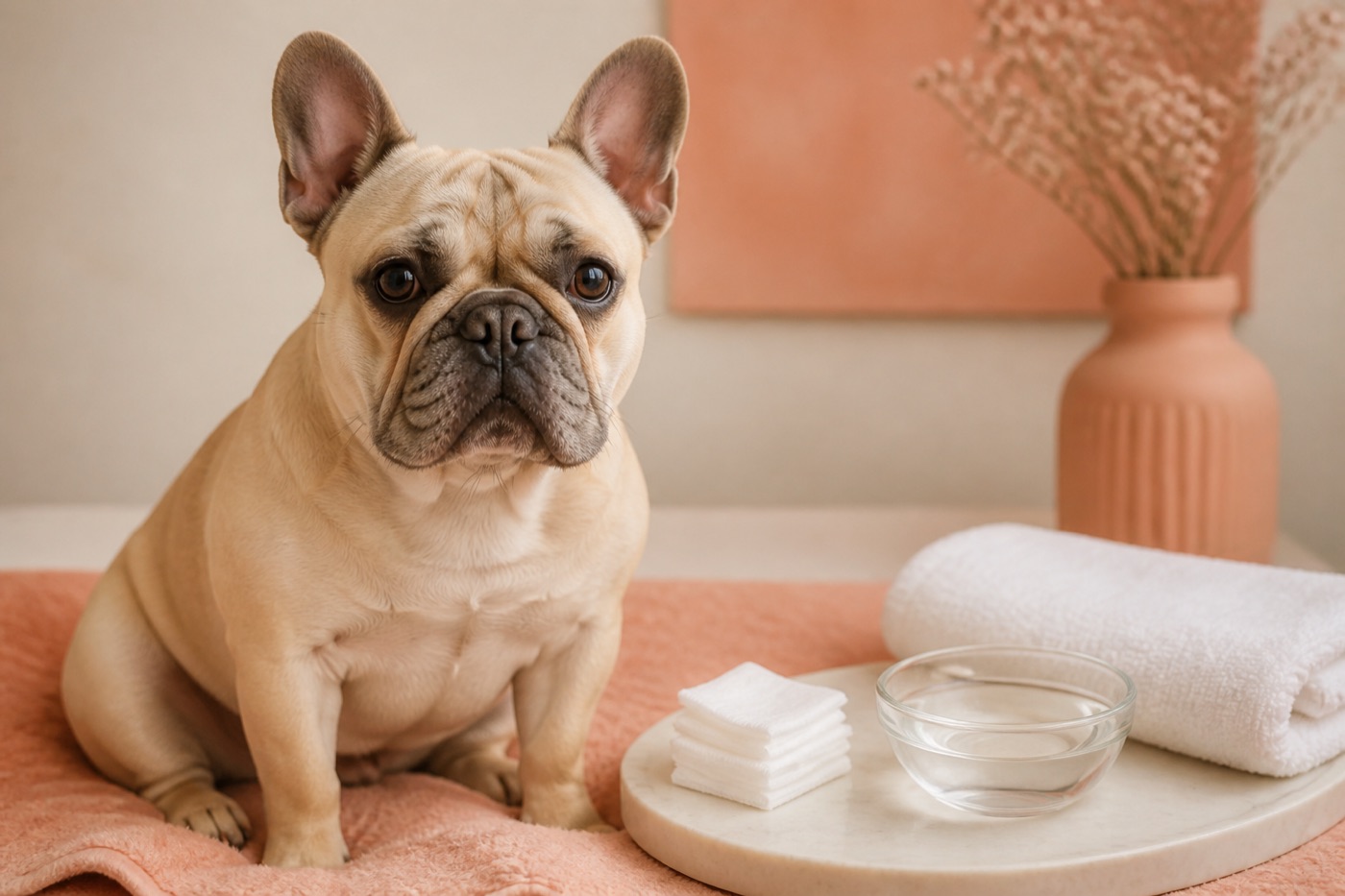
Why facial folds need attention
Facial folds place adjacent skin surfaces in close contact. VCA explains that these warm, humid spaces can hold moisture and allow normal skin bacteria to multiply, which can lead to skin-fold pyoderma. Bulldogs and other wrinkled breeds are predisposed.
The goal of routine care is not to sterilize the face or scrub away every stain. It is to notice changes early, remove ordinary debris without damaging the skin barrier, and prevent moisture from remaining trapped in the fold.
- Check the nose fold, lip folds, and any deep facial creases
- Compare both sides so subtle swelling is easier to notice
- Look after meals, drinking, bathing, and wet outdoor time
- Ask your veterinarian how often your individual dog needs cleaning
A simple maintenance routine
Begin with clean hands and good light. Gently lift each fold without stretching it. If the skin looks comfortable and the fold is clean and dry, leave it alone. Unnecessary repeated wiping can create friction and irritation.
When cleaning is needed, use a soft lint-free pad or cloth lightly moistened with a dog-safe cleanser recommended by your veterinarian. Wipe the accessible surface gently, using a fresh area of the pad for each fold. Never push a cotton swab deep into a crease or toward the eye.
- Use gentle pressure—never scrub
- Keep cleanser out of the eyes, nostrils, and mouth
- Use a separate clean pad for an irritated area
- Stop if the dog pulls away sharply or shows pain
Drying is part of the cleaning
After any damp cleaning, blot every fold with a clean, dry pad until no moisture remains. This step matters because skin folds create the warm, humid environment in which overgrowth can develop.
Check again a few minutes later if the crease is deep or your dog has been drinking. Do not leave a wet wipe, cloth, powder, or thick layer of product packed inside a fold. Products that trap moisture or are repeatedly licked may make the problem worse.
- Blot rather than rub
- Use a fresh dry section for each fold
- Dry the face after baths, rain, swimming, and messy meals
- Wash reusable cloths after every session
Choose products with your veterinarian
A healthy maintenance routine and treatment for dermatitis are not the same thing. Merck notes that topical therapy is an important part of managing bacterial and yeast overgrowth, but the correct active ingredient, concentration, contact time, and frequency depend on the diagnosis.
Do not improvise with essential oils, hydrogen peroxide, rubbing alcohol, fragranced human wipes, acne products, diaper creams, steroid creams, or leftover antibiotics. Even products commonly discussed online can irritate skin, harm the eyes, be unsafe if swallowed, or mask an infection. Ask your veterinarian to name the exact cleanser or medicated product and show you how to use it.
- Use only products labeled or prescribed for your dog’s situation
- Follow contact-time and rinsing directions exactly
- Stop a new product if redness or discomfort increases
- Do not combine medicated products unless your veterinarian directs it
Know the early warning signs
Redness, swelling, warmth, hair loss, repeated rubbing, tenderness, a sour or foul odor, greasy buildup, or yellow-brown discharge are not cosmetic problems. VCA describes skin-fold pyoderma as an infection that develops when bacteria multiply in moist folds.
Arrange a veterinary examination when these signs appear, especially if they persist after gentle drying or return repeatedly. Diagnosis may require examining or sampling the affected skin. Allergies, anatomy, and other underlying conditions can contribute to recurrence, so simply changing wipes may not solve the cause.
- Call promptly for pain, bleeding, open sores, pus, or swelling near an eye
- Seek urgent care for eye squinting, a cloudy eye, sudden facial swelling, or breathing difficulty
- Do not scrub crusts from raw skin
- Photograph changes in consistent light to help track progression
When recurring folds need a bigger plan
Dogs with repeated infections may need a veterinarian-designed maintenance plan, treatment for bacterial or yeast overgrowth, and evaluation for allergies or other predisposing disease. Merck emphasizes identifying and controlling underlying conditions when treating pyoderma.
Deep conformational folds can continue to trap moisture despite careful care. For severe or chronic cases, veterinarians may discuss longer-term medical management or corrective surgery. The right plan is the one that keeps the dog comfortable—not the one that produces the most elaborate daily routine.
The practical schedule
Inspect facial folds briefly every day and after they get wet. Clean only when debris or your veterinarian’s plan calls for it, then dry completely. Record recurring redness or odor so you can describe the pattern at an appointment.
A normal fold should not be painful, strongly odorous, wet, or coated in discharge. If maintaining comfort requires constant treatment, ask for a veterinary reassessment rather than escalating home products on your own.
Sources
The bottom line
Inspect regularly, clean gently only when needed, and dry every fold completely. Redness, odor, discharge, pain, or repeated flare-ups need veterinary assessment rather than stronger home products.