GIANT CLASS
XL crash-tested dog crates: what giant-breed owners need to know
For giant dogs, the words “crash tested” are only the beginning. The tested size, dog weight, anchor system, and fit inside your vehicle matter just as much.
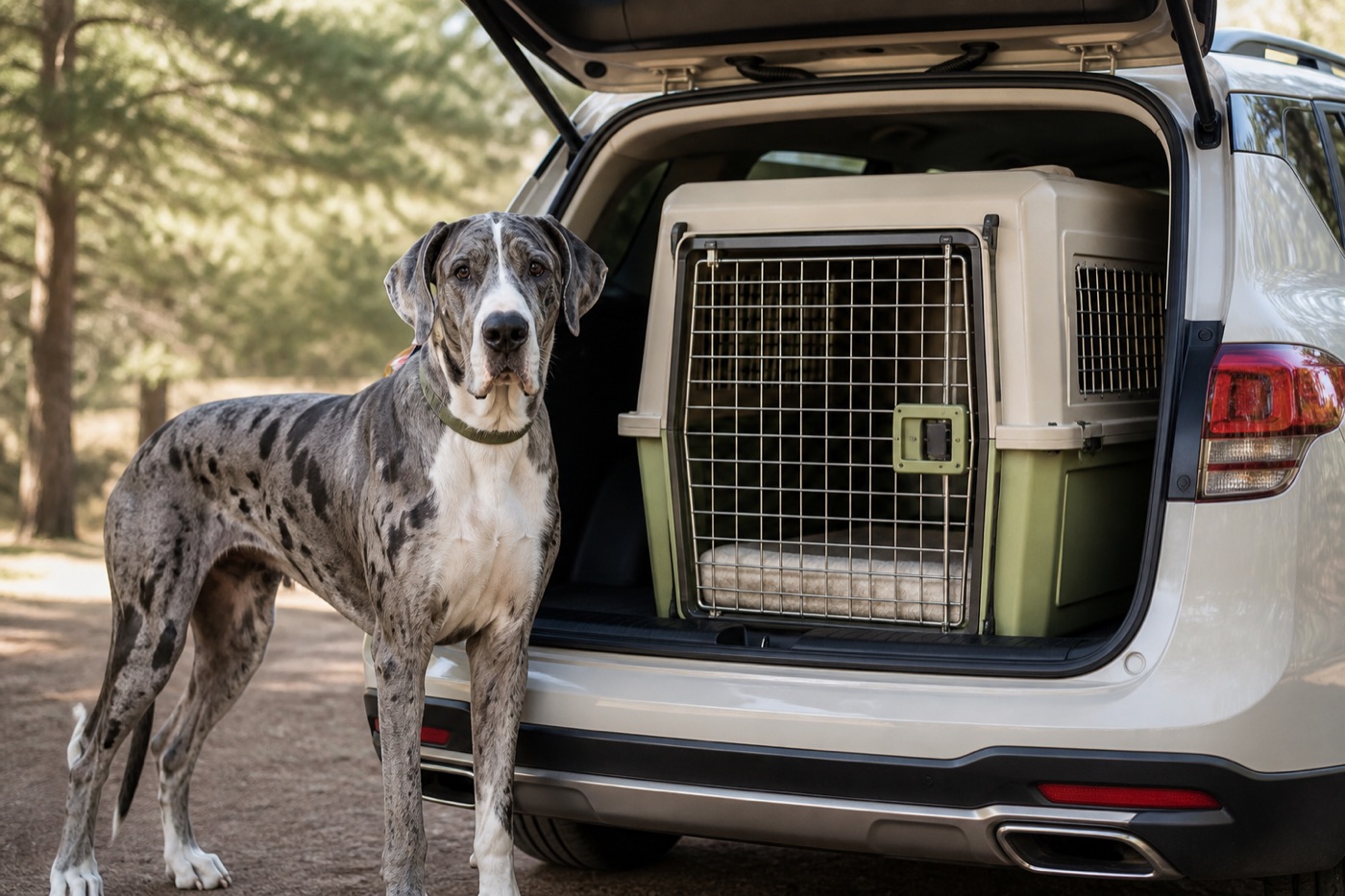
Crash tested is not the same as certified
A manufacturer can say a crate was crash tested without saying which size was tested, what protocol was used, or whether the product passed. Independent certification is more useful because it identifies the exact product configuration and the performance standard.
The Center for Pet Safety maintains a public list of independently certified travel crates. Check that list for the exact model and size—not just the brand name—before treating a marketing claim as proof of crash protection.
- Look for the exact model and size in the certification record
- Confirm the required anchor straps or connection kit
- Read the test-dog weight and installation instructions
- Treat an unlisted size as unverified, even if another size passed
The giant-breed size gap is real
Independent certification does not cover every crate size or every giant dog. For example, the Center for Pet Safety lists specific Gunner G1 sizes through Intermediate as certified; it does not list the G1 Large on its current certified-products page. Gunner publishes a larger model, but a larger product in the same family should not automatically inherit certification from a smaller one.
A Great Dane, Mastiff, or similarly tall dog may not fit a currently certified model. Do not force a dog into a crate simply to obtain a certification label. If no verified option fits, discuss the safest realistic travel plan with your veterinarian and a qualified vehicle-safety or pet-transport professional.
Measure the dog and the vehicle
Measure your dog according to the crate maker’s travel-sizing method, then compare those numbers with the crate’s usable interior dimensions. Next, measure the vehicle opening, cargo-floor footprint, roof clearance, and space needed to operate the door.
Weight matters twice: the dog must fall within the product’s tested or stated range, and the combined crate-and-dog weight must be manageable for the vehicle and its cargo anchors. The Gunner G1 Large, for example, is listed by its maker at 72 pounds empty, so installation and removal are not casual one-person tasks.
- Verify interior floor length, widest interior width, and height
- Check exterior dimensions against the narrowest vehicle opening
- Confirm that the installed crate will not obstruct visibility or exits
- Keep ventilation openings clear on every side required by the maker
Installation is part of the safety system
A strong shell cannot compensate for weak attachment. Use the exact strength-rated straps and anchor locations specified for the tested configuration. Cargo hooks designed only to keep groceries from sliding may not be structural anchors.
Place the crate only where its instructions allow, keep the dog’s collar and leash from becoming snag hazards, and inspect the door, latches, shell, straps, and anchors before each trip. Replace damaged components rather than improvising repairs.
- Follow the manufacturer’s orientation and tie-down path
- Never substitute bungee cords or light utility straps
- Do not rely on a seatback to restrain an unsecured crate
- Recheck strap tension after loading and during long trips
A responsible buying order
Start with fit, then verify certification scope, vehicle compatibility, and installation hardware. Price and convenience come after those four checks. If the only product that fits lacks independent certification, be honest about that limitation instead of treating a broad marketing phrase as a guarantee.
No crate can promise protection in every collision. Drive conservatively, secure loose cargo, keep the cabin temperature safe, and never leave a dog unattended in a parked vehicle.
Sources
The bottom line
Choose products that fit your dog, your routine, and professional care advice. Durable, comfortable, and easy to maintain usually beats flashy.